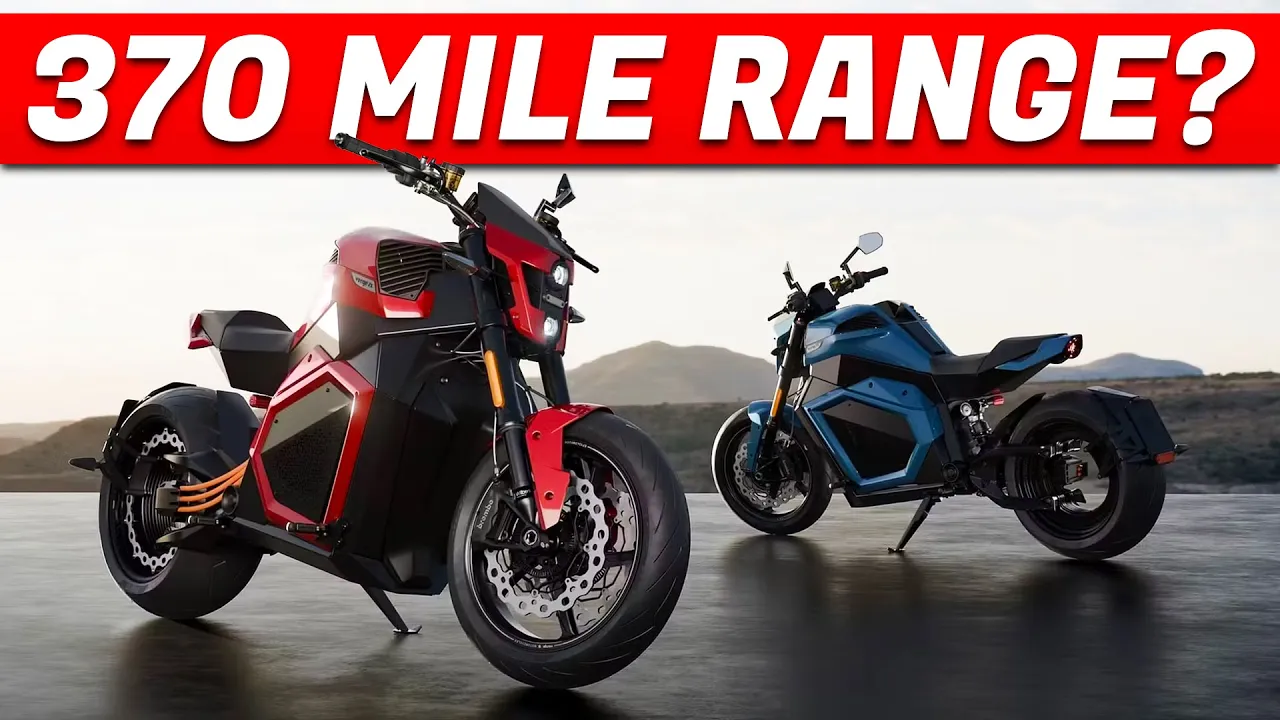
Verge's 370-Mile EV Dream: Solid-State Super Battery Hits a Q4 2026 Speed Bump
🚀 Insight
The electric vehicle landscape is constantly pushing boundaries, and Finnish startup Verge Motorcycles recently grabbed headlines with a bold claim: a 370-mile (600 km) range for their TS Pro electric motorcycle, powered by a revolutionary solid-state "super battery" from Donut Lab. This promised range would be a true game-changer for electric motorcycles, potentially eliminating range anxiety for good. However, as any seasoned tech analyst knows, groundbreaking claims often come with significant hurdles. And true to form, Verge has now confirmed a substantial delay, pushing the delivery of these super battery-equipped bikes to late 2026. This development casts a critical spotlight on the readiness of this much-hyped technology and begs the question: is this a temporary setback or a sign of deeper challenges?
⚙️ Deep Dive
- The Audacious Promise: The Verge TS Pro, with its distinctive hubless rear wheel design, already boasts impressive performance. The prospect of a 370-mile range using solid-state technology from Donut Lab elevates it into an entirely different league. Solid-state batteries, in theory, offer higher energy density, faster charging times, and enhanced safety compared to traditional lithium-ion cells – a holy grail for EV development.
- The Reality Check: Per a statement from Verge's CEO to InsideEVs, bikes featuring the new super battery are now slated for Q4 2026 delivery. This represents a significant postponement. Existing orders from 2025 for non-super battery models may still see delivery sooner, but those hoping for the extended range will be waiting nearly two more years.
- Production Bottlenecks: The InsideEVs article further reveals a projected production capacity of approximately 350 motorcycles annually. This isn't just limited; it's boutique-level. While orders may extend into 2027, this meager production volume, combined with the delivery delay, underscores the immense challenges in scaling up both the vehicle manufacturing and, more critically, the novel solid-state battery technology itself. Developing laboratory breakthroughs into reliable, mass-produced components is notoriously difficult and expensive.
- Technical Feasibility vs. Commercial Viability: While Donut Lab's technology might show promise in controlled environments, transitioning it to a commercially viable product for a demanding application like an electric motorcycle, especially one with such high performance expectations, presents a formidable engineering and manufacturing challenge. The delay suggests they've hit significant roadblocks in achieving consistent performance, reliability, or cost-effective production at scale.
💡 Verdict
Verge's ambition to redefine electric motorcycle range with solid-state batteries is commendable and represents a glimpse into the future of EV tech. However, the recent delivery delay to Q4 2026, coupled with extremely limited production capacity, moves the "370-mile dream" firmly into the realm of "wait and see." This isn't necessarily a "total BS" moment, but it's certainly a strong signal that the hurdles for commercializing cutting-edge battery technology remain substantial.
For eager riders, patience will be a virtue – and a necessity. The success of the Verge TS Pro with its super battery will hinge not just on achieving the promised range, but on demonstrating reliable, scalable production. Until then, Verge remains a fascinating concept that has yet to prove its real-world, long-term viability. We'll be keeping a close eye on their progress, hoping that the delay ultimately leads to a truly revolutionary product rather than a cautionary tale.
Source: Is Verge's New 370 Mile Battery For Real Or Total BS?


