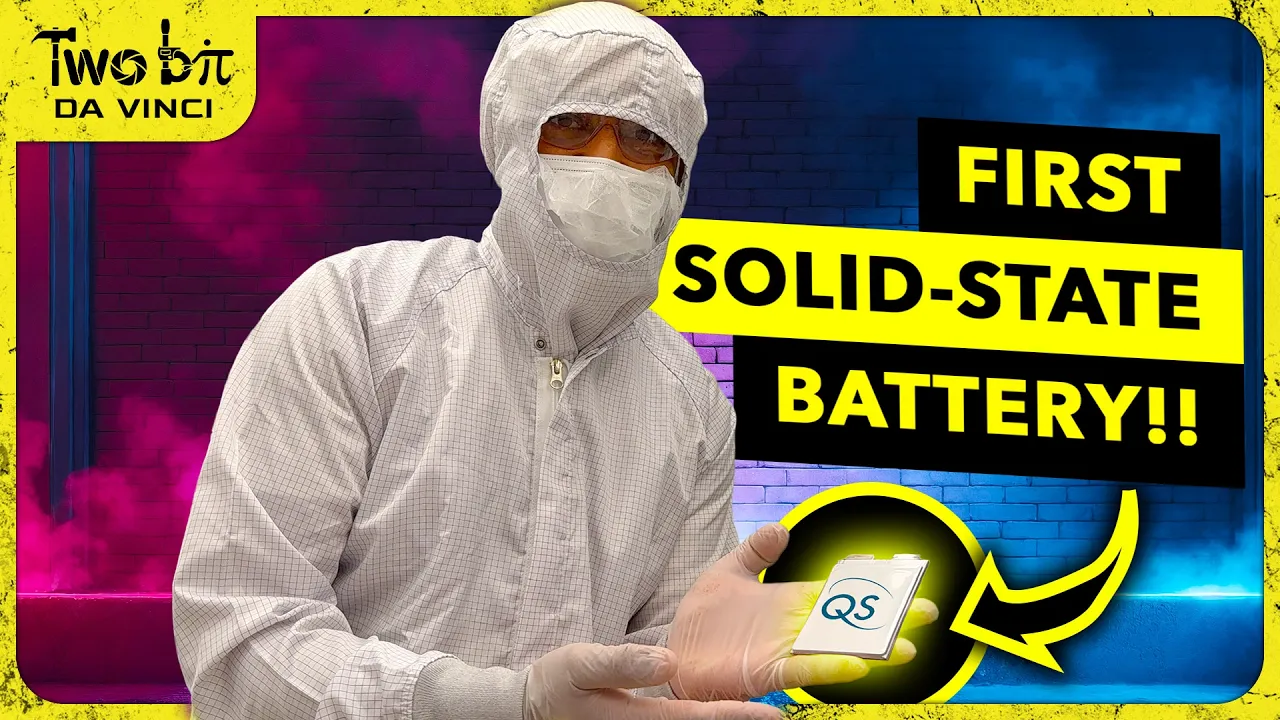
⚡ Engineering Insight
For decades, the holy grail of electrochemical energy storage has been the solid-state battery. Conventional lithium-ion (Li-ion) cells, reliant on flammable liquid electrolytes and graphite anodes, inherently limit energy density, power density, and safety. The challenge? Lithium dendrite formation during plating, leading to internal short circuits and thermal runaway, particularly with high-energy lithium metal anodes. QuantumScape's engineering breakthrough directly addresses this.
Their innovation centers on an "anode-free" cell architecture. Instead of pre-depositing a lithium metal anode, the design utilizes a ceramic solid electrolyte separator that functions as both the ion conductor and the physical barrier. During the initial charge cycle, lithium ions from the cathode traverse the ceramic separator and deposit on a copper current collector on the anode side, effectively creating a lithium metal anode in situ. This eliminates the inactive material mass of a conventional graphite or even silicon anode, dramatically boosting gravimetric and volumetric energy density potential by up to 80% compared to typical Li-ion cells.
The critical enabler is their proprietary ceramic separator. Historically, solid electrolytes have struggled with high impedance at the electrode interfaces, poor mechanical stability, and inability to suppress dendrites under practical current densities and cycling conditions. QuantumScape's ceramic material is engineered to be extremely dense and rigid, yet ionically conductive, effectively forcing homogeneous lithium plating. This material innovation is key to achieving a stable solid electrolyte interface (SEI) and preventing dendrite penetration, which is the primary failure mode for lithium metal batteries. The "pressure problem," where volumetric expansion of lithium metal during charge/discharge cycles could delaminate the solid electrolyte, appears to be mitigated by the ceramic's mechanical properties and interface engineering, allowing for the observed high coulombic efficiency.
The manufacturing scalability of such advanced ceramics, often a bottleneck, is addressed by their "Cobra Process." This high-throughput method aims to mass-produce these intricate ceramic separators with the required purity and dimensional precision, signaling a pathway from laboratory to gigafactory scale. The volumetric expansion of lithium, which can be up to 18%, is carefully managed within the cell stack design, demonstrating a profound understanding of electrochemical-mechanical coupling.
🛠️ Key Specs & Data
- Anode-Free Architecture: Achieves higher energy density by eliminating inactive anode material, with lithium metal formed in situ.
- Fast Charging: Demonstrated 0-80% state-of-charge (SOC) in approximately 15 minutes.
- High Coulombic Efficiency (CE): Sustained 99.996% CE over 1000+ cycles, critical for long cycle life and minimal capacity fade.
- Ceramic Solid Electrolyte Separator: Non-combustible, rigid, and ionically conductive, actively suppressing lithium dendrite formation.
- Enhanced Safety: Absence of flammable liquid electrolyte and prevention of dendrites significantly reduces thermal runaway risk.
- "Cobra Process": Proprietary manufacturing method for large-scale, high-quality ceramic separator production.
- Volumetric Expansion Management: Engineered to accommodate up to 18% lithium expansion during cycling without degradation.
⚖️ Pros & Cons
Pros:
- Superior Energy Density: The anode-free design with a lithium metal anode offers substantial gains (both gravimetric and volumetric) over current Li-ion chemistries, translating to longer range for EVs or more compact electronic devices.
- Ultra-Fast Charging: The low interfacial impedance and high ionic conductivity of the solid electrolyte enable significantly higher charge rates than conventional batteries, reducing charging times.
- Enhanced Safety Profile: Elimination of flammable liquid electrolytes and effective dendrite suppression fundamentally improves battery safety, mitigating risks of fire and explosion.
- Potentially Longer Cycle Life: The exceptionally high Coulombic Efficiency (99.996%) observed suggests excellent long-term capacity retention and cell durability.
- Simplified Bill of Materials (BOM): Removing the graphite anode and liquid electrolyte simplifies the cell structure and potentially reduces BOM cost in the long run, despite initial manufacturing complexities.
Cons:
- Manufacturing Scalability & Yield: The precise fabrication of ultra-thin, defect-free ceramic separators at scale, alongside managing their integration into cell stacks, presents significant manufacturing challenges. High scrap rates, as acknowledged, directly impact cost and production volume.
- Cost of Production: While the BOM may simplify, the specialized materials and complex, high-precision manufacturing processes for the ceramic separator and cell assembly are likely to result in higher initial production costs compared to established Li-ion lines.
- Mechanical Interface Stability: Despite engineering solutions, managing the 18% volumetric expansion of lithium metal and ensuring robust, low-impedance contact over thousands of cycles remains a sophisticated mechanical-electrochemical challenge.
- "Solid-State" Definition Nuance: While functionally operating as a solid-state battery, the in-situ plating of a lithium metal anode means the active anode material is dynamic, differentiating it from designs that use a pre-fabricated, stable solid lithium metal anode throughout. This is a technical nuance, not necessarily a performance drawback.
- Commercial Availability Timeline: Despite promising lab and pilot line results, widespread commercial adoption and integration into automotive platforms still face qualification, mass production, and cost reduction hurdles.
Conclusion
QuantumScape's solid-state battery technology represents a truly significant engineering achievement, pushing past fundamental electrochemical limitations that have plagued lithium metal batteries for decades. The anode-free design, coupled with their unique ceramic separator, addresses critical issues of energy density, power, cycle life, and safety in a compelling manner. While the core scientific and engineering challenges appear to have been overcome at the cell level, the transition to high-volume, cost-effective manufacturing with consistent yield remains the primary hurdle. The scrap rate is a critical metric to watch. If they can successfully scale production while maintaining performance and achieving competitive costs, QuantumScape could indeed be a paradigm shift for the energy storage landscape. The technology is compelling and represents a formidable stride towards the next generation of power.
Source: I just Saw the FIRST Solid State Battery - It Finally Happened?


