🚀 Insight
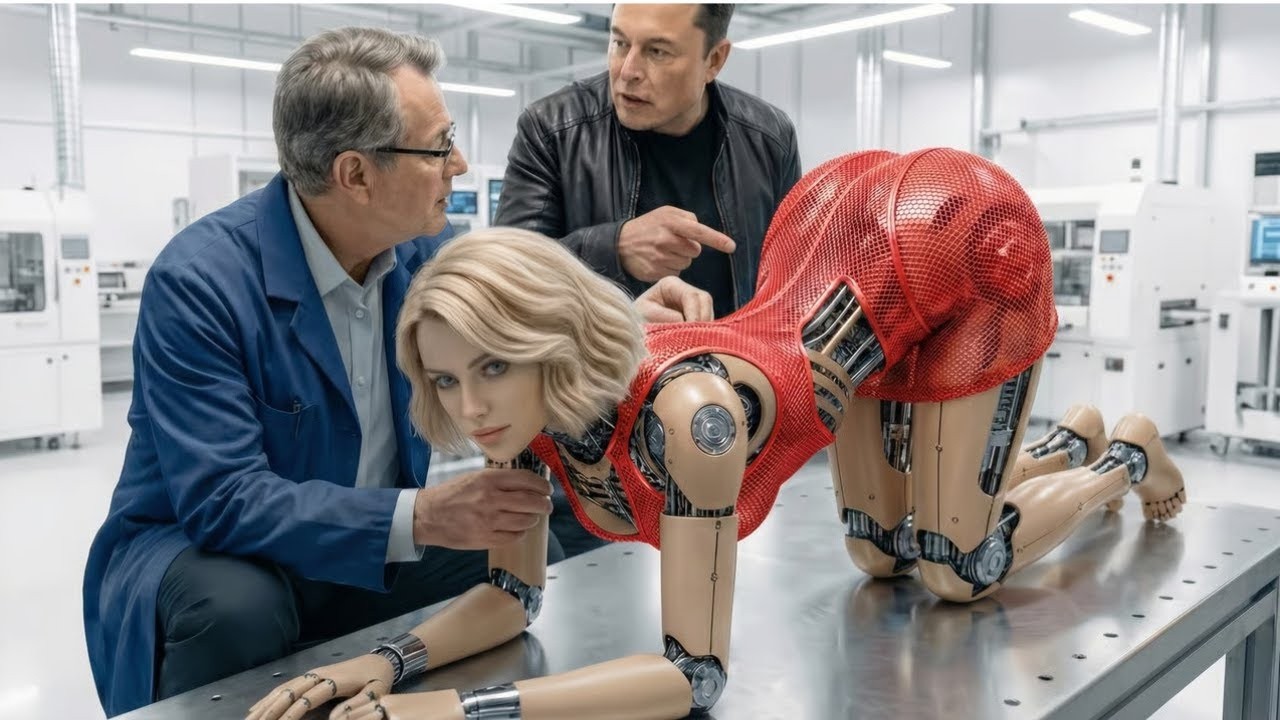
Tesla’s Optimus robot project continues to captivate and challenge our perceptions of automation. The latest "EXPOSED!" glimpses into Tesla’s "Robot Factory" don't just show manufacturing lines; they reveal a critical inflection point in the evolution of artificial intelligence and robotics. We're witnessing Optimus transition from a sophisticated machine prototype into a true humanoid, designed not just for repetitive tasks but for complex, adaptable interactions mirroring human capabilities. This deep dive isn't just about a robot; it's about Tesla's audacious bid to redefine industrial labor and, eventually, general-purpose tasks, leveraging their unparalleled expertise in AI and real-world data acquisition.
⚙️ Deep Dive
- Design Philosophy & Actuation: Optimus stands out with its focus on human-centric design. This isn't just aesthetic; it’s functional. Tesla is developing custom, highly efficient linear actuators and motors that mimic human muscle and tendon systems, allowing for a remarkable range of motion and strength-to-weight ratio. The goal is fluid, natural movement, crucial for navigating human environments and manipulating diverse objects.
- Advanced Sensory Suite: Drawing heavily from Tesla's autonomous driving stack, Optimus utilizes a sophisticated array of cameras (Tesla Vision), force sensors in its hands and limbs, and haptic feedback. This enables precise object recognition, depth perception, and most critically, delicate manipulation – a significant leap from industrial robots that often require custom tooling for specific tasks.
- Neural Network-Driven Intelligence: The "evolution from machine to humanoid" is powered by a robust AI architecture. Optimus is learning from vast datasets, not just simulated environments but real-world scenarios observed by Tesla's fleet of vehicles. This allows it to develop generalized skills, adapt to unforeseen situations, and perform tasks without explicit programming for every single action. We're seeing early applications of motion planning, reactive balancing, and object interaction built upon this foundation.
- Dexterity & Fine Manipulation: A key differentiator for humanoid robots is their ability to perform intricate tasks. Recent demonstrations highlight Optimus’s growing dexterity, from delicate gripping to complex multi-step assembly operations. This capability is paramount for its envisioned roles, first within Tesla's own factories, and later potentially in logistics, service, or even domestic settings.
- Manufacturing Scalability: The "robot factory" concept isn't just about building robots, but building them *at scale*. Tesla is applying its gigafactory principles to Optimus production, aiming to reduce costs and increase output exponentially. This is vital for making humanoid robots economically viable beyond niche industrial applications.
💡 Verdict
The journey of Optimus from concept to an increasingly capable humanoid is undeniably one of the most significant tech narratives of our time. While challenges remain – particularly around robust generalization, long-term autonomy, and ethical considerations – Tesla's relentless pace suggests Optimus is not a distant sci-fi dream but a near-future reality. Expect to see Optimus play an increasingly visible role in Tesla's own operations, refining its capabilities in controlled, high-stakes environments. The long-term outlook points to a future where general-purpose humanoid robots could fundamentally alter labor markets, create new industries, and even integrate into daily life. The "EXPOSED" look into its development hints at a world on the cusp of a profound robotic revolution.
Source: Tesla's Robot Factory EXPOSED! Optimus Evolution from Machine to Humanoid
🛠️ Dive Deeper into the Engineering Core
👉 Click here to read the full technical breakdown on our Community Forum!


