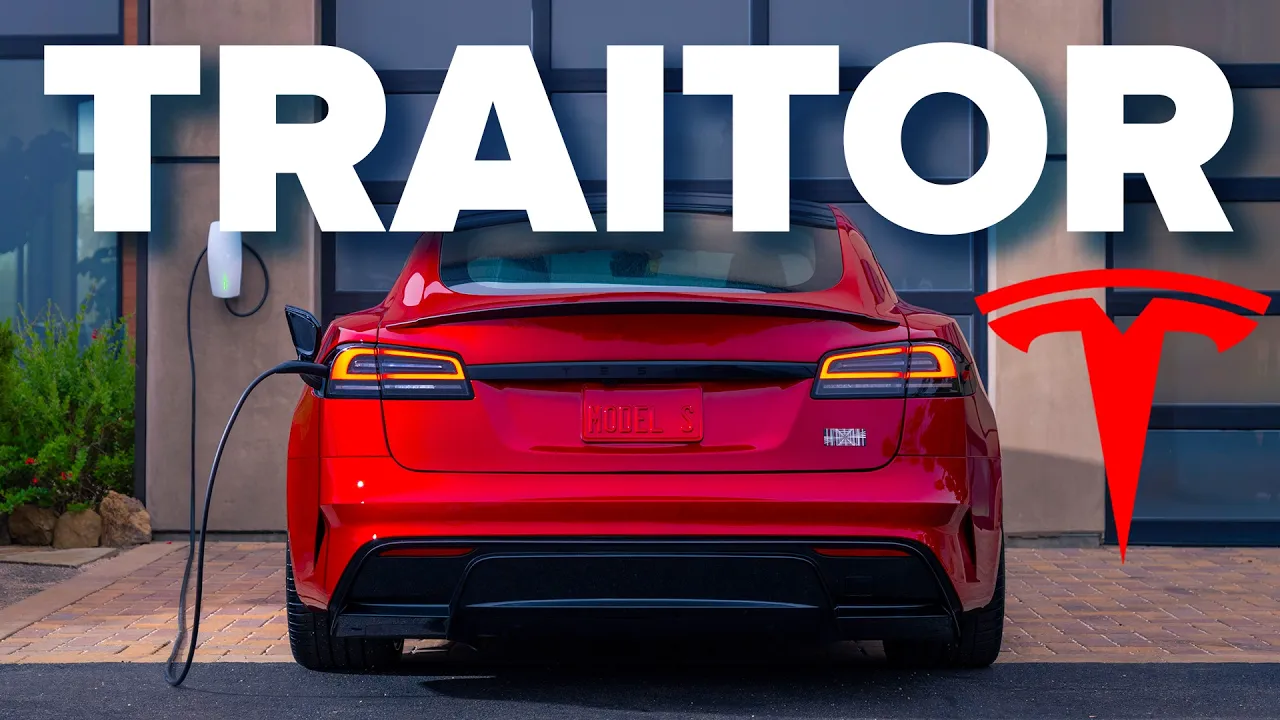
🚀 Insight: The End of an Era? Tesla's Bold Strategic Pivot
In a move that has sent ripples across the automotive and tech industries, Tesla has confirmed the discontinuation of its flagship Model S and Model X vehicles. Revealed during the pivotal Q4 2025 Earnings call, this decision marks a profound strategic realignment for Elon Musk's empire. While the Model 3 and Model Y continue to drive volume, the departure of the S and X signals a conscious shift away from its luxury performance origins, opening a tantalizing window for enthusiasts to grab a piece of history before it vanishes. Simultaneously, the earnings call provided significant updates on Optimus production, underscoring Tesla's deepening commitment to AI and robotics as its next frontier.
⚙️ Deep Dive: Decoding Tesla's Future Trajectory
- The Sunset of Flagship Sedans and SUVs: The Model S, Tesla's original game-changer, and the Model X, its distinctive SUV, have long represented the pinnacle of electric luxury and performance. Their discontinuation, effective immediately with "still time" to order remaining stock, suggests a strategic streamlining. This could be driven by several factors: optimizing production lines for higher-volume, lower-cost models (Model 3/Y), reallocating engineering talent and capital to nascent projects, or perhaps a recognition that the luxury segment, while prestigious, no longer aligns with Tesla's broader, mass-market electrification and autonomy ambitions. For current S and X owners, this could mean increased exclusivity, but also questions about future support and resale values in the long term.
- Optimus Ascendant: The significant updates on Optimus production were perhaps the most telling signal of Tesla's future. While the automotive arm refines its offerings, the humanoid robot project is clearly accelerating. This move solidifies Tesla's narrative as an AI and robotics company, not just a car manufacturer. Detailed progress on manufacturing capabilities, cost reduction, and potential deployment timelines for Optimus indicate a serious intent to scale this venture, potentially disrupting labor markets and industrial automation on a global scale. This pivot showcases Musk's vision of a future where Tesla's AI prowess extends far beyond self-driving cars.
- Q4 2025 Earnings Call: A Blueprint for Diversification: The earnings call itself was less about celebrating past automotive sales and more about charting a course for unprecedented diversification. By shedding the Model S and X, Tesla appears to be freeing up resources to aggressively pursue AI, robotics, and potentially other energy solutions, while continuing to dominate the accessible EV market. This strategic consolidation of automotive offerings allows for a hyper-focus on optimizing the Model 3/Y production, innovating battery technology, and accelerating FSD development, all while simultaneously incubating the next generation of Tesla's technological leap with Optimus.
💡 Verdict: A New Tesla Emerges
Tesla is undeniably at an inflection point. The decision to discontinue the Model S and X is not merely a product line adjustment; it's a profound declaration of intent. We are witnessing Tesla evolve from a premium EV pioneer into a diversified tech conglomerate with autonomous vehicles as just one facet of its AI-driven ecosystem. The shift towards Optimus highlights a bold bet on a future where intelligent robots play a significant role in everyday life and industry. This pivot, while potentially jarring for traditional automotive enthusiasts, is a calculated risk that could unlock exponential growth in new markets. The clock is ticking for those who've dreamed of owning a new Model S or X – this is truly the last call. For the rest of us, it's a front-row seat to watch a tech titan redefine its legacy, one robot, and one mass-market EV at a time. The automotive landscape is changing, and Tesla is once again leading the charge, albeit in unexpected directions.
Source: Elon Cuts Model S & X From Tesla's Line Up | There's Still Time


