⚡ Engineering Insight
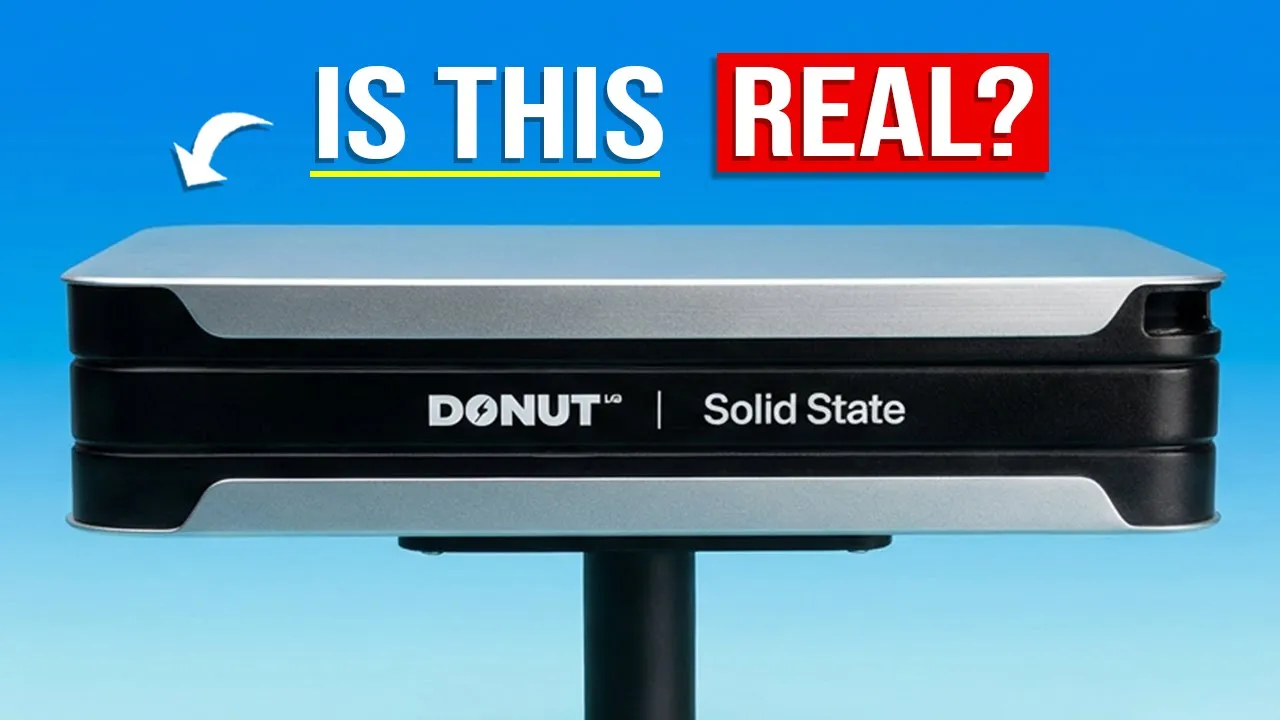
The recent discourse surrounding Donut Labs' solid-state battery, amplified by investigations from industry commentators like Juho (@Akkutohtori) and Ricky (@TwoBitDaVinci), warrants a deeper engineering analysis beyond the CES floor hype. The primary innovation here is not merely the solid-state electrolyte, but its synergistic combination with a Sodium-Ion (Na-ion) chemistry leveraging a novel organic cathode. This is a fundamental departure from the prevailing lithium-based, inorganic cathode architectures.
From a power systems perspective, the claimed charging rates—potentially exceeding 50C—present a paradigm shift. Such high C-rates would necessitate a complete overhaul of vehicle power electronics and charging infrastructure. Existing On-Board Chargers (OBCs) and DC fast-charging stations would be inadequate. The required power transfer (a 100kWh pack at 60C demands 6MW) mandates the use of wide-bandgap semiconductors, making high-voltage **SiC** (Silicon Carbide) MOSFETs non-negotiable for managing the thermal load and efficiency at such currents. Furthermore, the battery's ability to source and sink immense transient currents would directly enhance the performance of the powertrain's inverter. The precision of the **FOC** (Field-Oriented Control) algorithms in the **VFD** (Variable Frequency Drive) relies on a stable DC bus voltage; a battery with a flat discharge curve and low internal impedance under extreme loads enables more aggressive and efficient motor control strategies, translating to superior vehicle dynamics.
The core science, suggested by related research in publications like Nature Communications, points to redox-active organic molecules as the cathode material. These materials can be engineered for fast ion kinetics and avoid the resource constraints (Cobalt, Nickel) of traditional NMC/NCA cathodes. However, the stability of the Solid Electrolyte Interphase (SEI) on both the anode and cathode sides, especially with sodium ions and organic materials, remains the critical unknown and the primary hurdle to achieving automotive-grade cycle life.
🛠️ Key Technical Specs
- Cell Chemistry: Sodium-Ion (Na-ion) full cell.
- Cathode: Proprietary organic carbonyl-based redox-active material. Eliminates transition metals like cobalt and nickel from the bill of materials (BOM).
- Anode: Unconfirmed. Likely hard carbon for near-term viability or a sodium metal anode as a long-term goal, enabled by the dendrite-suppressing solid electrolyte.
- Electrolyte: Solid-state polymer or ceramic composite (specifics undisclosed). Key enabler for safety and potential Na-metal anode compatibility.
- Specific Energy (Projected): Target figures likely aim for 250-350 Wh/kg to be competitive, though initial Na-ion SSB generations may be lower.
- C-Rate (Charge/Discharge): Claimed >20C, with demonstrations targeting up to 60C (i.e., a one-minute charge). This is the headline specification.
- Cycle Life: Lab-scale data from analogous organic systems suggest >1000 cycles with high capacity retention, but real-world automotive cycle life (8-10 years, >3000 cycles) is unproven.
- Safety Profile: Inherently high due to the elimination of flammable liquid organic electrolytes. Reduced risk of thermal runaway.
⚖️ Pros & Cons
Pros:
- BOM & Supply Chain: The use of sodium and organic cathode materials drastically reduces material costs and decouples the supply chain from geopolitically sensitive lithium, cobalt, and nickel resources. This is arguably the technology's most significant industrial advantage.
- Extreme Fast Charging (XFC): If scalable, the C-rate performance would eliminate range anxiety and enable EV charging times comparable to gasoline refueling, revolutionizing the user experience.
- Inherent Safety: Solid-state construction mitigates the primary failure mode (thermal runaway from electrolyte combustion) of conventional lithium-ion cells.
Cons:
- Manufacturing Scalability: The synthesis and processing of novel organic cathode materials and solid electrolytes at GWh scale is a massive, unproven industrial challenge. Uniformity, purity, and cost-effective roll-to-roll processing are significant hurdles.
- Lower Volumetric Energy Density: Sodium ions are larger and heavier than lithium ions, which generally leads to lower energy density. This may penalize vehicle range or increase pack weight compared to state-of-the-art Li-ion chemistries.
- Electrochemical Stability: Long-term stability of the organic cathode and the solid-electrolyte interphases over thousands of deep cycles in a demanding automotive environment is the largest technical risk.
- Ecosystem Immaturity: The supporting infrastructure, from 6MW chargers to grid-level power delivery, does not currently exist to support the claimed charging speeds at scale.
Conclusion
Donut Labs presents a compelling vision for a post-lithium battery architecture. The chemistry is sound and addresses the most pressing raw material and safety concerns of the current industry. The focus on an organic cathode within a Na-ion SSB is a scientifically elegant approach to achieving high power density. However, the chasm between a successful lab-scale prototype and a mass-produced, cost-effective, and reliable automotive battery pack is substantial. The claims should be viewed as a technology demonstrator showcasing the potential of this chemistry. While the impact on the system-level **BOM** and performance is undeniable, significant engineering challenges in materials science, manufacturing, and system integration must be solved. This is a critical technology to monitor, but its industrial prime is still on a multi-year horizon.
Note: AI-assisted technical analysis. Verify specs before application.
Source Video: Decoding The World's First Solid State Battery


