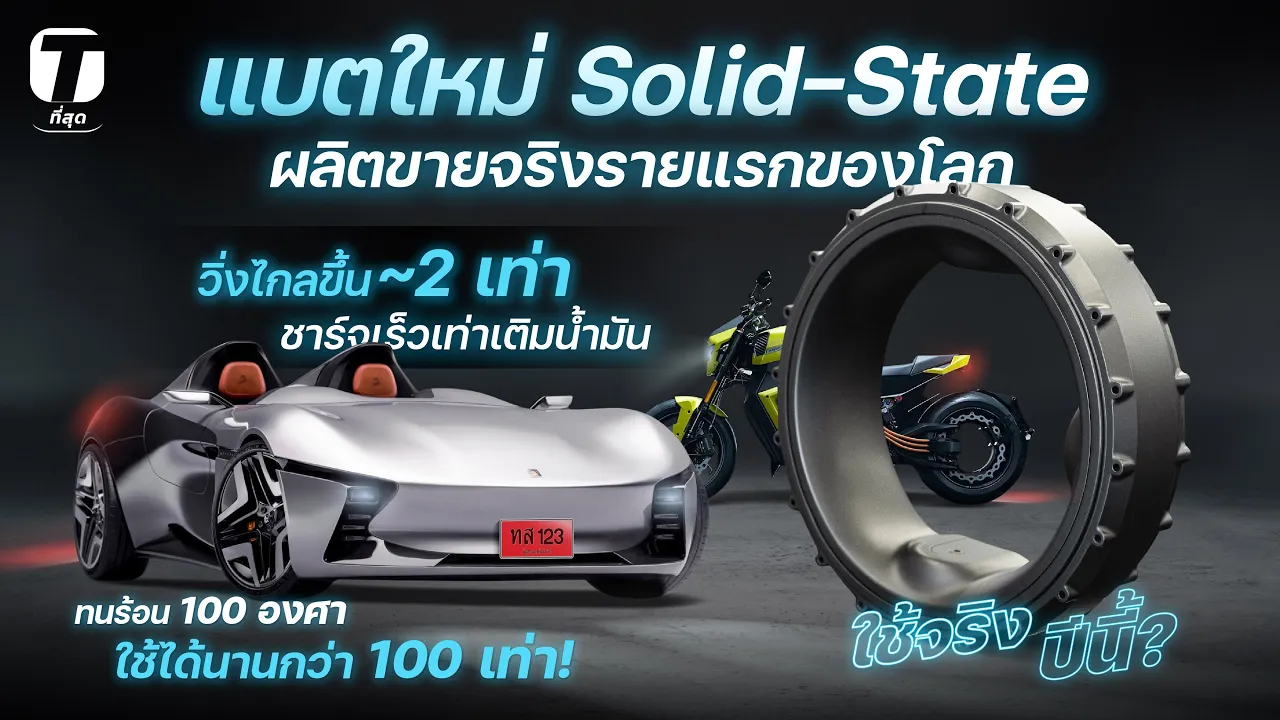
The pursuit of a truly transformative electric vehicle (EV) often hinges on one critical component: the battery. While lithium-ion (Li-ion) chemistry has propelled the current generation of EVs, its inherent limitations—namely energy density, thermal management complexity, and cycle life degradation—have fueled an intensive global race toward the next frontier: the Solid-State Battery (SSB). Emerging from this highly competitive landscape, Finnish startup Donut Lab claims to have launched the world's first commercially available all-solid-state battery. As a Senior Electrical Engineer, I approach such announcements with both keen interest and rigorous skepticism. Let's dissect their claims.
⚡ Engineering Insight
The transition from liquid to solid electrolytes in batteries is not merely an incremental improvement; it represents a fundamental paradigm shift with profound engineering implications. Traditional Li-ion cells utilize a flammable liquid electrolyte, necessitating elaborate thermal management systems (TMS) and robust safety protocols to mitigate the risk of thermal runaway. Solid-state electrolytes inherently eliminate these concerns, offering superior thermal stability and intrinsic safety. This allows for simpler, lighter battery packs and a wider operational temperature envelope, which is crucial for global EV deployment.
Donut Lab's claims of high energy density suggest advancements in both active material utilization and interfacial engineering. The challenge with SSBs typically lies in achieving low interfacial impedance between the solid electrolyte and the electrodes, ensuring efficient lithium-ion transport. A 100,000-cycle life assertion is particularly audacious, implying exceptional stability of the Solid Electrolyte Interphase (SEI) and minimal volume changes within the electrode materials during repeated charge/discharge cycles. If validated, this dramatically extends the battery's operational lifespan, potentially outlasting the vehicle itself and opening avenues for second-life applications in grid storage.
Furthermore, Donut Lab’s integrated approach, encompassing the "Donut Motor" (an in-wheel motor), a dedicated processing unit, and DonutOS, indicates a holistic EV powertrain strategy. The performance of their in-wheel motor would undoubtedly rely on sophisticated motor control techniques like Field-Oriented Control (FOC) implemented via a Variable Frequency Drive (VFD). To achieve the claimed efficiency and power density for such a compact motor, the power electronics, specifically the inverter, would likely leverage advanced Silicon Carbide (SiC) semiconductors. SiC's superior switching speeds and lower conduction losses are critical for optimizing efficiency and reducing the size and Bill of Materials (BOM) of the motor drive system, complementing the high-performance battery pack.
The claim of lower manufacturing costs than Li-ion, alongside the use of locally sourced materials, is intriguing. For SSBs, the primary cost drivers have historically been the specialized manufacturing processes required for thin, defect-free solid electrolyte membranes and the critical anode/cathode interface formation. If Donut Lab has genuinely overcome these hurdles at scale, it represents a significant manufacturing breakthrough, potentially democratizing advanced battery technology.
🛠️ Key Specs & Data (Donut Lab Claims)
- Battery Type: All-Solid-State
- Energy Density: High (Specific Wh/kg or Wh/L figures not yet provided)
- Cycle Life: Up to 100,000 charge/discharge cycles
- Charging Speed: Fast-charging capability
- Safety & Thermal Stability: Excellent resistance to extreme hot and cold temperatures; inherently safer than Li-ion
- Cost: Claimed lower manufacturing cost than current Li-ion batteries
- Materials: Utilizes locally sourced raw materials
- Initial Applications:
- Verge Motorcycles (premium electric motorcycles)
- WattEV's proprietary EV platform
- Cova Power Smart Trailer (smart electric trailer)
⚖️ Pros & Cons
Pros (Based on Donut Lab's Claims):
- Revolutionary Performance: High energy density promises significantly extended range and reduced weight.
- Unprecedented Longevity: 100,000 cycle life redefines battery lifespan, potentially enabling vehicle-to-grid (V2G) and long-term grid storage applications.
- Enhanced Safety: Elimination of flammable liquid electrolytes mitigates thermal runaway risks, simplifying battery pack design and improving consumer confidence.
- Wider Operating Range: Superior thermal stability allows operation in more extreme environmental conditions without significant performance degradation or complex active cooling.
- Cost Reduction Potential: If indeed cheaper to produce at scale, this could accelerate EV adoption and enable new market segments.
- Supply Chain Resilience: Utilization of locally sourced materials enhances supply chain security and reduces geopolitical dependencies.
Cons (Engineering Scrutiny & Industry Challenges):
- Lack of Independent Validation: The most significant drawback. "Extraordinary claims require extraordinary evidence." Without third-party verification from established testing bodies or peer-reviewed publications, these performance figures remain unproven and are subject to market speculation.
- Undisclosed Specifics: The absence of concrete energy density figures (e.g., Wh/kg, Wh/L) makes it difficult to quantitatively assess the magnitude of the claimed "high" density against current Li-ion benchmarks or other SSB prototypes.
- Scalability & Manufacturing Hurdles: Mass production of SSBs faces unique challenges, including maintaining consistent interfacial contact pressure, minimizing internal resistance variations across large cells, and achieving high manufacturing yields. The transition from pilot-scale to gigafactory-scale production often introduces unforeseen complexities.
- Dendrite Mitigation: While SSBs are touted for dendrite suppression, especially with lithium metal anodes, ensuring 100,000 cycles requires impeccable dendrite growth mitigation strategies, which are notoriously difficult over extended periods.
- Cost at Scale: While Donut Lab claims lower cost, the initial cost-performance parity for novel battery technologies can be challenging, especially for materials and processes not yet fully optimized for mass production.
Conclusion
Donut Lab's announcement, if fully substantiated, represents a monumental leap forward in battery technology, capable of addressing the primary limitations holding back widespread EV adoption. The promise of higher energy density, unparalleled cycle life, enhanced safety, and lower cost constitutes a complete paradigm shift. However, as Senior Electrical Engineers, our professional obligation demands a degree of cautious optimism. The history of battery development is replete with promising laboratory breakthroughs that faltered at the scale-up and commercialization stages. The lack of detailed specifications and, critically, independent third-party validation are significant caveats that cannot be overlooked. The EV industry and the broader energy sector will be eagerly awaiting rigorous, verifiable data that confirms Donut Lab's claims. Should their technology withstand such scrutiny, Donut Lab could indeed be poised to redefine the future of electric mobility.
Source: มาปีนี้? แบตใหม่ Solid-State ผลิตรายแรก วิ่งไกลขึ้น~2 เท่า ทนร้อนจัด ใช้นานขึ้น 100 เท่า! - [ที่สุด]


