🚀 Insight
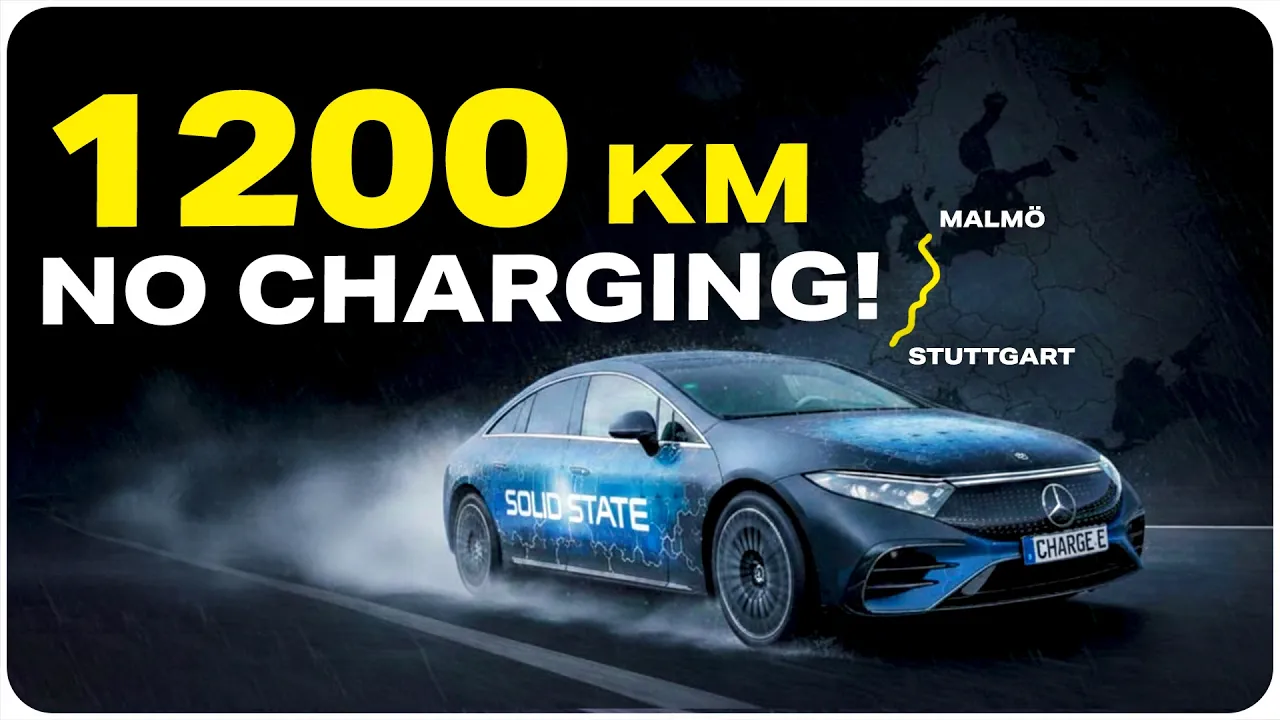
The automotive world is buzzing, and for good reason: Mercedes-Benz has reportedly smashed the EV range record, achieving an astounding 1,200 kilometers on a single charge. This isn't just another incremental improvement; it signals a potential paradigm shift, largely thanks to rapid advancements in solid-state battery (SSB) technology. For years, SSBs have been the holy grail of electric vehicle innovation, promising not only unprecedented ranges that eliminate 'range anxiety' but also lightning-fast charging times and significantly improved safety profiles compared to conventional lithium-ion batteries. Now, with major players like BMW, Toyota, and Volkswagen also heavily invested in this cutting-edge research, the question moves from 'if' to 'when' we'll see these revolutionary powerhouses powering our everyday commutes and road trips. This breakthrough by Mercedes suggests that the 'when' might be much sooner than many anticipated.
⚙️ Deep Dive
- **The Solid-State Advantage:** At the heart of this revolution lies the solid-state battery. Unlike traditional lithium-ion batteries that rely on a flammable liquid electrolyte, SSBs utilize a solid material – be it ceramic, polymer, or sulfide – to conduct ions between the electrodes. This fundamental change offers several critical advantages: significantly higher energy density for extended ranges, non-flammable solid materials for enhanced safety, and potentially faster charging rates due to improved ion conductivity.
- **Navigating the Hurdles:** The journey to commercial SSBs hasn't been without its challenges. The video highlights 'The Big HURDLE' (Chapter 12:25), which typically involves complex manufacturing processes, ensuring stable material interfaces, mitigating internal resistance, and achieving cost-effective scalability for mass production. These are intricate material science and engineering problems that require substantial R&D.
- **Semi-Solid Solutions as a Bridge:** Recognizing these complexities, many manufacturers are also exploring 'semi-solid-state batteries' (Chapter 05:28) as a viable interim technology. These hybrid solutions offer some of the SSB benefits while easing the transition from current lithium-ion designs. Companies like SAIC (Source 5, 8, 21) are already deploying these in models like the MG4, providing a glimpse into the future.
- **The Global Race for Dominance:** The pursuit of solid-state supremacy is a global one, with each automotive giant forging strategic partnerships and making significant R&D investments:
- **Mercedes-Benz** (Chapter 06:43) is closely collaborating with **Factorial Energy** (Source 9, 10, 20), a leader in solid-state technology, to develop an all-solid-state battery, aiming for commercialization in future models by mid-decade.
- **Volkswagen** (Chapter 08:17), through its battery company PowerCo, has heavily invested in **QuantumScape** (Source 11, 12, 14, 16). QuantumScape's recent 'QSE-5' B-samples have shown promising results in initial testing, demonstrating excellent performance and safety characteristics.
- **BMW** (Chapter 10:05) is working alongside **Solid Power** (Source 13) and has deep ties with **Samsung**, exploring various solid-state chemistries to integrate into their next-generation EVs.
- **Toyota** (Chapter 10:44), a long-time proponent of solid-state technology (Source 6), has made significant strides and announced ambitious plans, though their timelines have occasionally shifted (Source 15), reflecting the inherent complexities of bringing this advanced tech to mass production. They're even aiming for batteries with an impressive 40-year lifespan (Source 6).
- **The Science Behind the Breakthroughs:** The collaborative efforts, often involving academic partners like Professor Jürgen Janek and Dr. Joachim Sann from the University of Giessen, are critical. Their work focuses on overcoming the fundamental material science challenges – developing stable solid electrolytes that can withstand repeated charging cycles, operate reliably across diverse temperature ranges, and be produced at scale.
💡 Verdict
So, can we expect to buy cars with full solid-state batteries as early as next year? The video, and the current landscape, suggest a nuanced answer. While prototypes like Mercedes' record-breaker and QuantumScape's impressive B-samples (Source 14) clearly demonstrate the technology's immense potential and rapidly maturing state, widespread mass production for *full* solid-state batteries in everyday consumer vehicles is likely still a few years away for most manufacturers. Toyota's history (Source 15) illustrates the inherent challenges in pinning down exact timelines for such complex innovations.
However, the rapid deployment of semi-solid-state batteries by companies like SAIC (Source 5, 21) indicates that we are definitely on the cusp of a significant transition. These hybrid solutions will provide a taste of enhanced range, faster charging, and improved safety benefits while the industry refines the 'holy grail' all-solid-state versions. The implications are profound: once manufacturing hurdles are fully overcome and costs driven down, solid-state batteries will not only eliminate range anxiety and revolutionize charging for EVs but also unlock new possibilities for grid storage and portable electronics. The future of electric mobility, marked by safer, longer-lasting, and higher-performing vehicles, is no longer a distant dream but a rapidly approaching reality. The breakthroughs discussed here are not just breaking records; they're laying the foundation for an entirely new era of sustainable transportation.
Source: 1,200km Without a Stop: Mercedes Smashes the Range Record!


