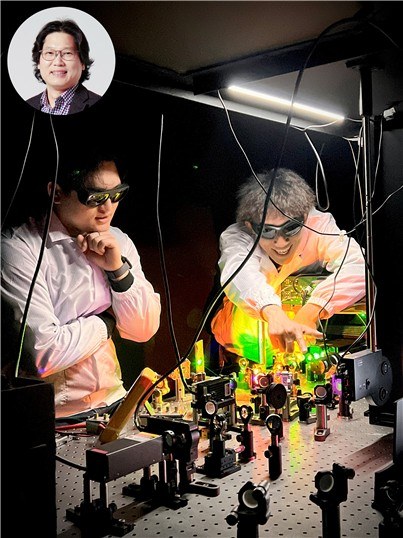
The future of Artificial Intelligence may hinge on a recent, groundbreaking discovery from South Korean researchers – a staggering 8300% amplification of exciton diffusion, promising a revolution in ultra-low power semiconductor technology. ⚡ This advancement directly addresses the escalating energy demands of AI and could be the key to sustainable growth in the industry.
The AI Power Crisis & The Need for Efficiency
Artificial Intelligence is rapidly transforming our world, but its insatiable appetite for power is becoming a critical concern. Training and deploying complex AI models requires immense computational resources, translating to massive electricity consumption. This isn’t just an economic issue; it’s an environmental one. The current trajectory is unsustainable, demanding innovative solutions to drastically reduce the energy footprint of AI hardware. Low-power chip technology isn’t just desirable – it’s essential for the long-term viability of AI development and deployment.
Understanding Excitons and the Breakthrough
At the heart of this breakthrough lies the manipulation of excitons. Excitons are bound pairs of an electron and an electron hole, created when a material absorbs light. They act as energy carriers, but traditionally, their diffusion – their ability to travel through a material – has been limited. This limitation hinders their effectiveness in semiconductor devices.
The South Korean research team, as reported by @eInfomaxAI, has achieved a remarkable feat: amplifying exciton diffusion by an unprecedented 8300%. This means excitons can now travel significantly further within the semiconductor material, carrying energy more efficiently and reducing energy loss as heat. The specific methodology behind this amplification hasn’t been fully detailed in publicly available information as of April 20, 2026, but it’s understood to involve novel material engineering and potentially, the manipulation of quantum confinement effects. This discovery represents the first of its kind globally, positioning South Korea at the forefront of low-power semiconductor innovation.
Implications for Chip Design and AI Applications
The implications of this discovery are far-reaching. Increased exciton diffusion amplification allows for the creation of semiconductors that require significantly less energy to operate. This translates to:
Reduced Energy Consumption
Lower power consumption directly addresses the AI power crisis, making AI applications more environmentally friendly and cost-effective. Imagine AI-powered devices that can run for days on a single charge, or data centers that dramatically reduce their carbon footprint.
Enhanced Chip Performance
While focused on low power, this technology doesn’t necessarily sacrifice performance. Efficient energy transfer can actually *improve* chip performance by reducing heat buildup and allowing for denser chip designs.
New Possibilities in Mobile and IoT Devices
The development of ultra-low power semiconductors will be particularly impactful for mobile devices, Internet of Things (IoT) sensors, and other battery-powered applications. These devices will benefit from extended battery life and increased functionality.
Key Takeaways
- 8300% Exciton Diffusion Amplification: A world-first achievement by South Korean researchers.
- Addressing the AI Power Crisis: This breakthrough directly tackles the growing energy demands of AI.
- Potential for Ultra-Low Power Chips: Leads to more efficient and sustainable semiconductor technology.
- Wide-Ranging Applications: Impacts everything from mobile devices to large-scale data centers. 🔋
This exciting development promises a future where AI can continue to advance without compromising our planet’s resources, and we eagerly await further details on the specific techniques employed by the research team.
── NEWTECH💬 加入討論:對這篇文章有想法嗎?
歡迎到我們的討論區留言交流:
https://youriabox.com/discussion/topic/south-korean-breakthrough-exciton-diffusion-amplification-paves-the-way-for-ultra-low-power-semiconductors/
📷 素材來源:@eInfomaxAI
📌 相關標籤:Semiconductors、AI、Low Power、Excitons、Technology、Innovation
✏️ NEWTECH | 更新日期:2026/04/20


