🚀 Insight
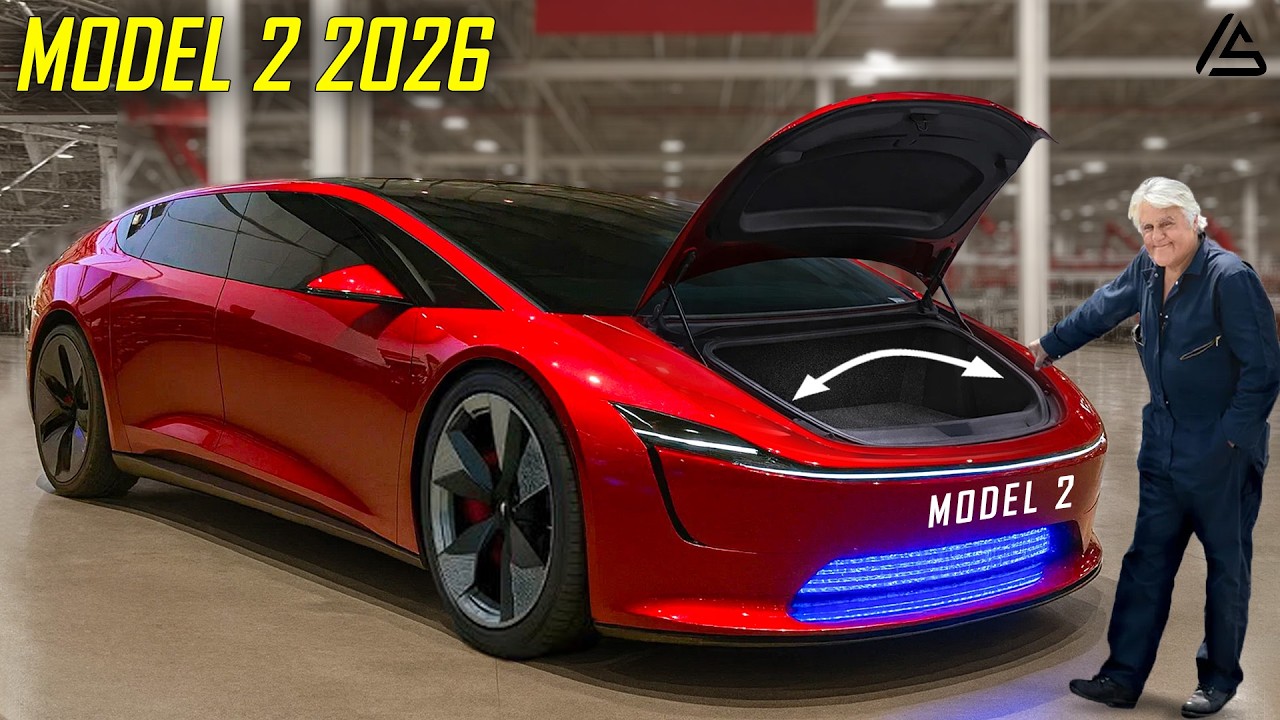
The automotive industry is approaching a "Model T moment" with the 2026 Tesla Model 2. As a Senior Tech Analyst, I see this not just as a cheaper vehicle, but as a total collapse of traditional manufacturing overhead. Tesla isn't just "shrinking" a Model 3; they are fundamentally re-engineering the assembly line using the "Unboxed" process. By shifting away from the traditional linear assembly line toward modular sub-assemblies—aided by massive GigaPress castings—Tesla aims to slash production costs by 50% and factory footprint by 40%. The goal isn't just a $25,000 price tag; it's the achievement of sustainable margins at that price point, something legacy OEMs are currently struggling to conceptualize.
⚙️ Deep Dive
- The Dry 4680 Breakthrough: The heart of the Model 2’s price efficiency lies in the Dry Cathode 4680 cells. By removing the energy-intensive "wet" coating process, Tesla reduces factory space and energy consumption significantly, aiming for a structural battery pack that doubles as the car's floor.
- Revolutionary Wiring & Glass: To cut weight and complexity, the Model 2 is expected to utilize printed glass wiring. This reduces the heavy, manual-labor-intensive wire harnesses found in traditional cars, contributing to faster automated assembly.
- GigaPress & Structural Integrity: Using 9,000-ton GigaPress machines, Tesla will cast the front and rear sections as single pieces. This eliminates hundreds of weld points and parts, which not only lowers costs but improves safety through a more rigid chassis.
- Next-Gen Safety: The "Triple-Layer Door" safety design and a move toward Aluminum-Ion or LFP (Lithium Iron Phosphate) chemistries suggest a vehicle designed for extreme longevity and reduced fire risk, targeting lower insurance premiums and higher resale value.
- Vertical Integration 2.0: Beyond the car, Tesla is integrating in-house solar scaling and adaptive suspension systems. This vertical stack allows them to optimize software (fixing issues like "phantom braking") and hardware simultaneously, ensuring the Model 2 isn't a "budget" car in performance, just in price.
- Graphene Tires & Efficiency: Rumors of graphene-infused tires point toward a focus on reducing rolling resistance and extending tire life, critical for the higher torque profiles of electric drivetrains.
💡 Verdict
The 2026 Tesla Model 2 is the most significant threat to the internal combustion engine (ICE) market to date. While the $25,000–$28,000 price range is the headline, the real story is the manufacturing efficiency. If Tesla successfully scales the Dry Cathode 4680 production and the "Unboxed" assembly method, the Model 2 will offer a lower Total Cost of Ownership (TCO) than almost any gasoline compact on the market. For investors and tech enthusiasts, the Model 2 isn't just a new car—it's a signal that Tesla is transitioning from an EV company to a global manufacturing powerhouse. Expect a massive shift in market share starting in 2026.
Source: 2026 Tesla Model 2: Factory, Battery & Price Signals Explained MIX
🛠️ Dive Deeper into the Engineering Core
👉 Click here to read the full technical breakdown on our Community Forum!


