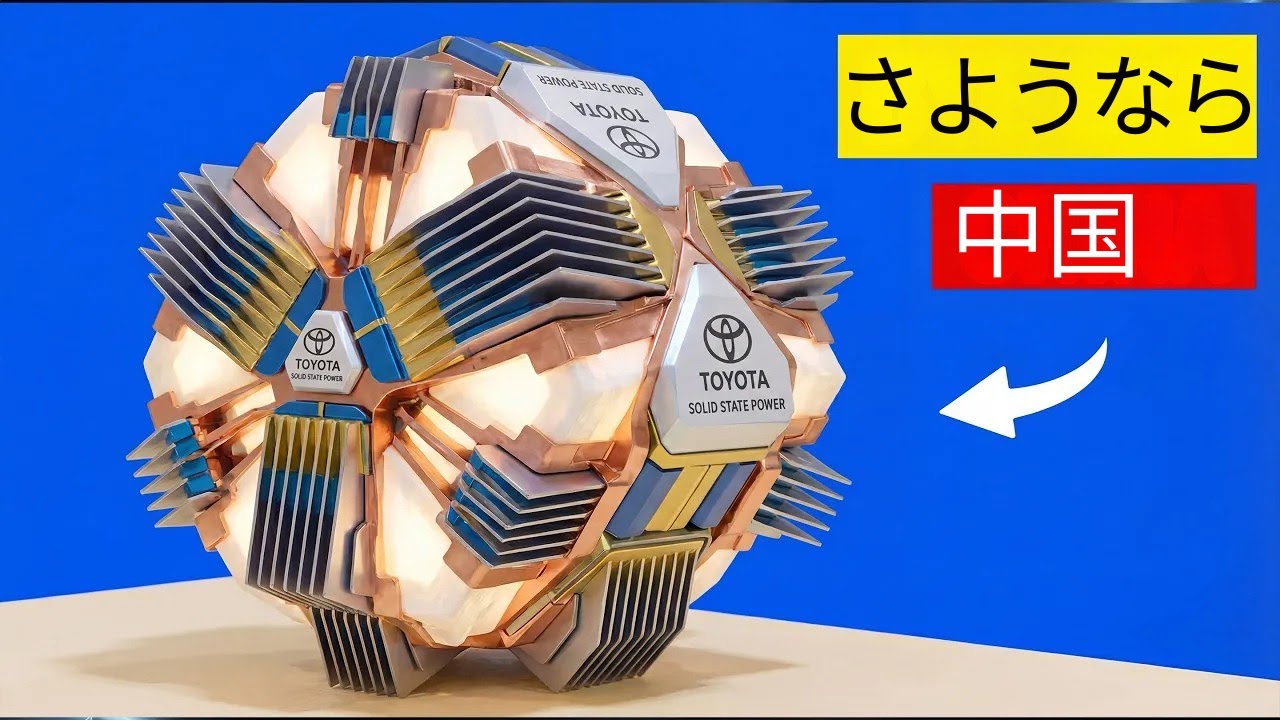
Toyota's Solid-State Battery: The 2026 EV Game-Changer is Taking Shape!
By [Your Name/Senior Tech Analyst]
🚀 Insight
For years, the promise of solid-state batteries has been the EV industry's 'holy grail' – a monumental leap in energy density, safety, and charging speed. While many have made bold claims, Toyota, a company often criticized for its slower EV adoption, is now making a definitive statement: their next-generation solid-state battery is on track for practical application by 2026. This isn't just a lab prototype; the latest updates from Toyota reveal tangible progress in factory construction and the transition to mass production readiness. This video offers a crucial glimpse into how Toyota plans to shift from theoretical advantage to real-world deployment, potentially redefining the automotive power landscape.
⚙️ Deep Dive
- 2026 Target for Practical Application: Toyota's timeline for deploying solid-state batteries is ambitious yet increasingly credible. The "practical application" implies initial deployment, likely in high-end or specific models, before a broader rollout.
- Advanced Factory Construction: The core of this update highlights the physical manifestation of Toyota's commitment. Progress in factory construction signals that the intricate, specialized manufacturing processes required for solid-state cells are being put in place, moving beyond pilot lines to a scalable production environment.
- Transition to Mass Production: This is perhaps the most significant revelation. Overcoming the challenges of mass-producing solid-state cells – ensuring consistent quality, managing material costs, and scaling complex assembly methods – has been a major industry bottleneck. Toyota's progress here suggests they are developing proprietary manufacturing innovations to make high-volume production viable.
- Manufacturing Process Innovations: While specific details are often guarded, the focus on "key innovations in the manufacturing process" suggests breakthroughs in areas such as electrolyte fabrication (e.g., sulfide-based), electrode stacking techniques, and quality control at micron levels. These are critical for preventing dendrite formation, maintaining cell stability, and achieving targeted performance metrics.
- Anticipated Performance Metrics: While not explicitly stated in this update, typical solid-state benefits Toyota aims for include significantly higher energy density (potentially extending range by 50% or more compared to current lithium-ion), ultra-fast charging capabilities (e.g., 10-80% in under 10 minutes), and enhanced safety due to the non-flammable solid electrolyte.
💡 Verdict
Toyota's latest solid-state battery updates are far more than just conceptual announcements; they represent a concrete, tangible progression towards a groundbreaking reality. The emphasis on factory construction and the transition to mass production readiness by 2026 transforms solid-state from a distant dream into a near-term strategic differentiator. If Toyota can indeed scale production efficiently and cost-effectively, it has the potential to leapfrog competitors in key performance areas, particularly range, charging speed, and safety. This could fundamentally reshape consumer expectations for EVs and exert immense pressure on other automakers to accelerate their own next-gen battery roadmaps. The race for EV dominance just got a new, very serious contender, and it's coming from a familiar name, but with a radically different power source.
Source: トヨタの新型全固体電池が二〇二六年に登場 ― 製造・建設の最新アップデート
🛠️ Dive Deeper into the Engineering Core
👉 Click here to read the full technical breakdown on our Community Forum!


