Tesla's Optimus Gen 2: Decoding Musk's 2025 Blueprint for a Humanoid Future
🚀 Insight
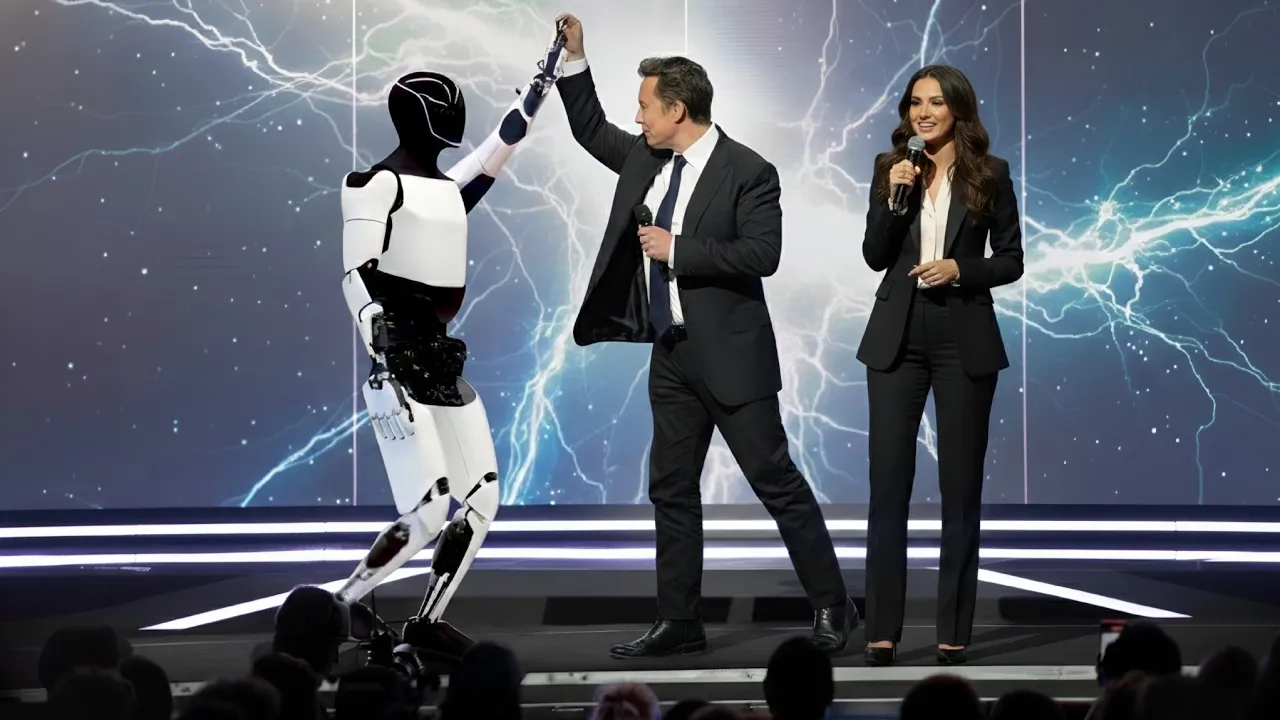
Elon Musk has delivered a compelling update on Tesla's humanoid robot, Optimus, confirming the Gen 2 iteration is not just making strides but is on an aggressive trajectory towards mass production. With a significant 2025 target for rollout, Tesla is transitioning its ambitious robotics project from advanced prototype to a tangible, 'V1 production-ready' entity. This strategic pivot marks a critical juncture, positioning Optimus as a formidable contender to fundamentally redefine automation, labor, and societal interaction with AI-powered machines. The sheer speed of development, particularly for a general-purpose humanoid, signals Tesla's unwavering commitment to disrupting industries far beyond electric vehicles.
⚙️ Deep Dive
- Enhanced Dexterity and Control: Optimus Gen 2 showcases marked improvements in fine motor control and manipulation. This is crucial for executing complex tasks in unstructured environments, moving beyond basic locomotion to intricate interactions with tools and objects, mirroring human-level precision.
- Refined Locomotion and Balance: Expect smoother, faster, and more robust navigation capabilities. Optimus is evolving to handle diverse terrains and dynamic obstacles with greater agility and stability, making it a viable worker in various real-world settings from factories to more unpredictable human environments.
- Advanced AI and Real-time Processing: Leveraging Tesla's formidable AI infrastructure (akin to its FSD development), Gen 2 features more sophisticated real-time decision-making, improved object recognition, and adaptive learning. This moves the robot closer to truly intelligent autonomy, capable of understanding and responding to its surroundings without constant human oversight.
- 'V1 Production-Ready' Design: This critical designation signifies a fundamental shift towards manufacturability and cost-effectiveness. The design is optimized for mass production, implying a more durable, modular, and potentially more affordable unit, laying the groundwork for the expansive 2025 production goals.
- Strategic 2025 Rollout & Phased Deployment: The aggressive 2025 timeline isn't just about unit production; it hints at initial deployment strategies. We anticipate Optimus being integrated into Tesla's own Giga-factories first, serving as a rigorous testing ground to refine both hardware and software in high-demand industrial scenarios before wider commercial release.
- Improved Energy Efficiency and Endurance: For practical, real-world deployment, Optimus Gen 2 will require extended operational periods. Significant advancements in battery technology and power management are being implemented to maximize uptime and minimize charging cycles, crucial for continuous workflow in industrial and service applications.
💡 Verdict
The unveiling of Optimus Gen 2 and its aggressive 2025 production roadmap signals more than just another product launch; it's Tesla's audacious bid to redefine the very fabric of automation. While the initial focus will undoubtedly target repetitive industrial tasks and hazardous environments, the long-term vision positions Optimus as a multi-faceted agent capable of transforming everything from logistics and elder care to personal assistance. The sheer scale of Tesla's ambition, coupled with its manufacturing prowess and AI leadership, suggests that the hurdles—cost, real-world adaptability, and public perception—are not insurmountable.
If Tesla can achieve its 2025 goals, Optimus Gen 2 won't just be a future of automation; it could very well be the future, heralding an era where human-robot collaboration is commonplace, and the lines between industrial efficiency and daily assistance blur. This isn't just about building a robot; it's about building the infrastructure for a truly autonomous world. The coming years will be pivotal in determining if Optimus lives up to its name and truly optimizes our future.
Source: Elon Musk Reveals Tesla Optimus Gen 2 Delivery Date and Huge 2025 Production Update


